WhatsApp Us

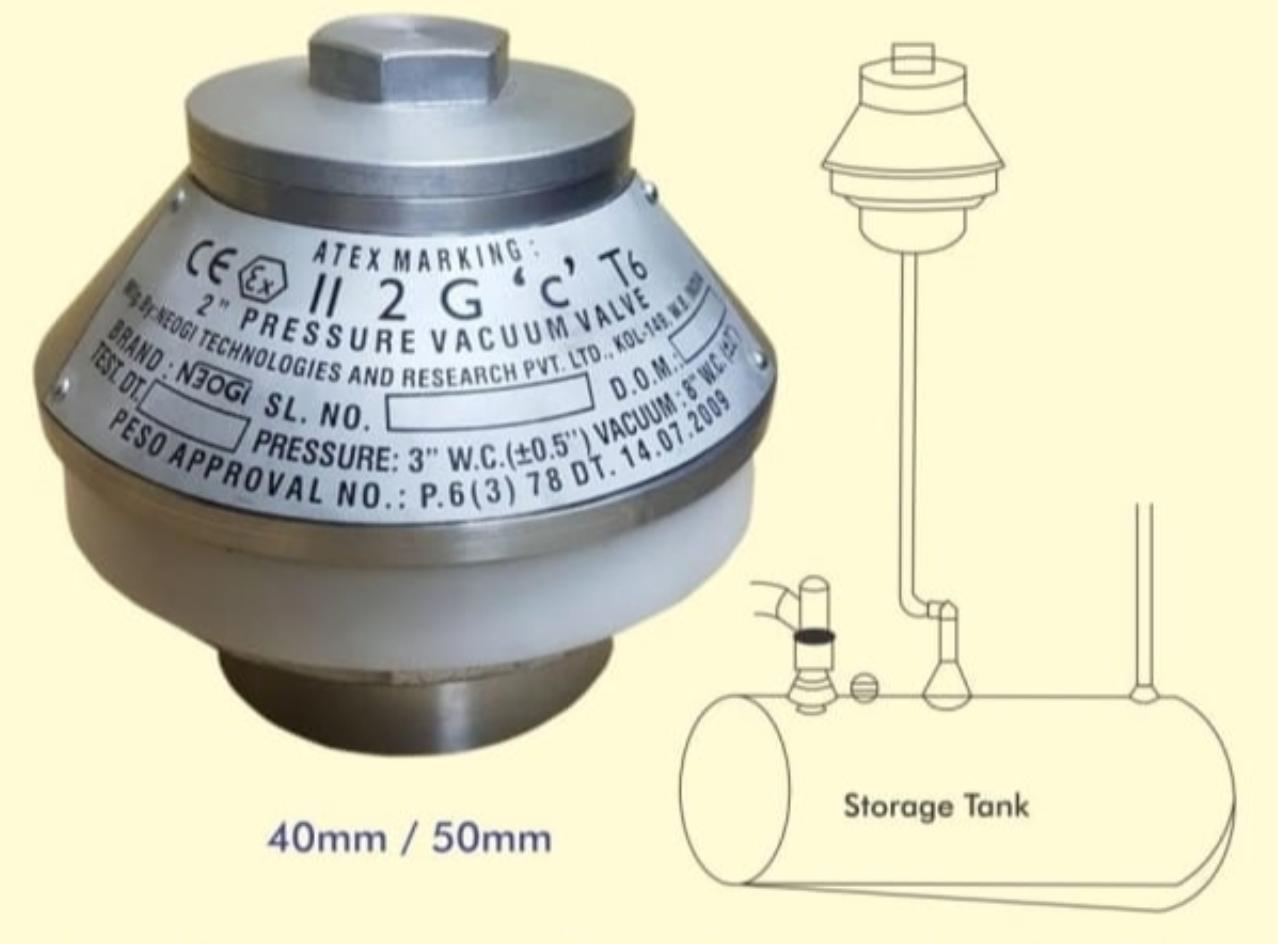
Every litre of fuel that evaporates from a storage tank is money lost, a compliance risk, and an environmental hazard. Yet many fuel storage setups still lose a measurable percentage of stock every year simply because the tank isn't fitted with the right venting equipment. The component responsible for preventing this is the PV valve — one of the most important, and most overlooked, parts of any fuel storage system.
At Neogi Technologies (NTR Pvt. Ltd.), our NEOGI PV Valve (Pressure Cum Vacuum Valve) is one of our best-selling products, approved by Bharat Petroleum and other major oil marketing companies for use on their authorized materials list. Here's what a PV valve does, why it matters, and what to check before you buy one.
A PV valve, or Pressure Vacuum Valve (also called a pressure vacuum breather valve or tank vent valve), is a safety and conservation device fitted to the vent line of a fuel storage tank — underground or above-ground. It controls the pressure and vacuum inside the tank as fuel is added, withdrawn, or as temperature changes cause the vapor inside to expand and contract.
Rather than leaving the tank permanently open to atmosphere (which lets vapor escape continuously) or fully sealed (which risks dangerous pressure buildup), a PV valve stays closed under normal conditions and only opens at a predetermined pressure or vacuum setting — releasing or admitting air only when necessary.
Inside the valve, two separate sealing mechanisms handle two different conditions:
Both discs remain fully closed during normal operating conditions, which is what makes the valve effective at minimizing evaporation loss — vapor only escapes when the tank genuinely needs to vent.
Not all PV valves offer the same level of protection or compliance. Before purchasing, verify:
Our NEOGI PV Valve (40mm / 50mm) is a PESO and ATEX-certified pressure vacuum breather valve, engineered to minimize fuel evaporation loss while protecting both underground and above-ground storage tanks. It's approved by Bharat Petroleum and other major oil companies, making it a trusted choice for depots, terminals, and retail fueling stations across India.
Manufactured in-house at our ISO 9001:2015, ISO 14001:2015, and ISO 45001:2018 certified facility, the NEOGI PV Valve reflects the same engineering standards that have made Neogi Technologies a trusted fuel management partner since 1971.
https://ntrindia.com/product/neogi-pv-pvalve-pressure-cum-vacuum-valve
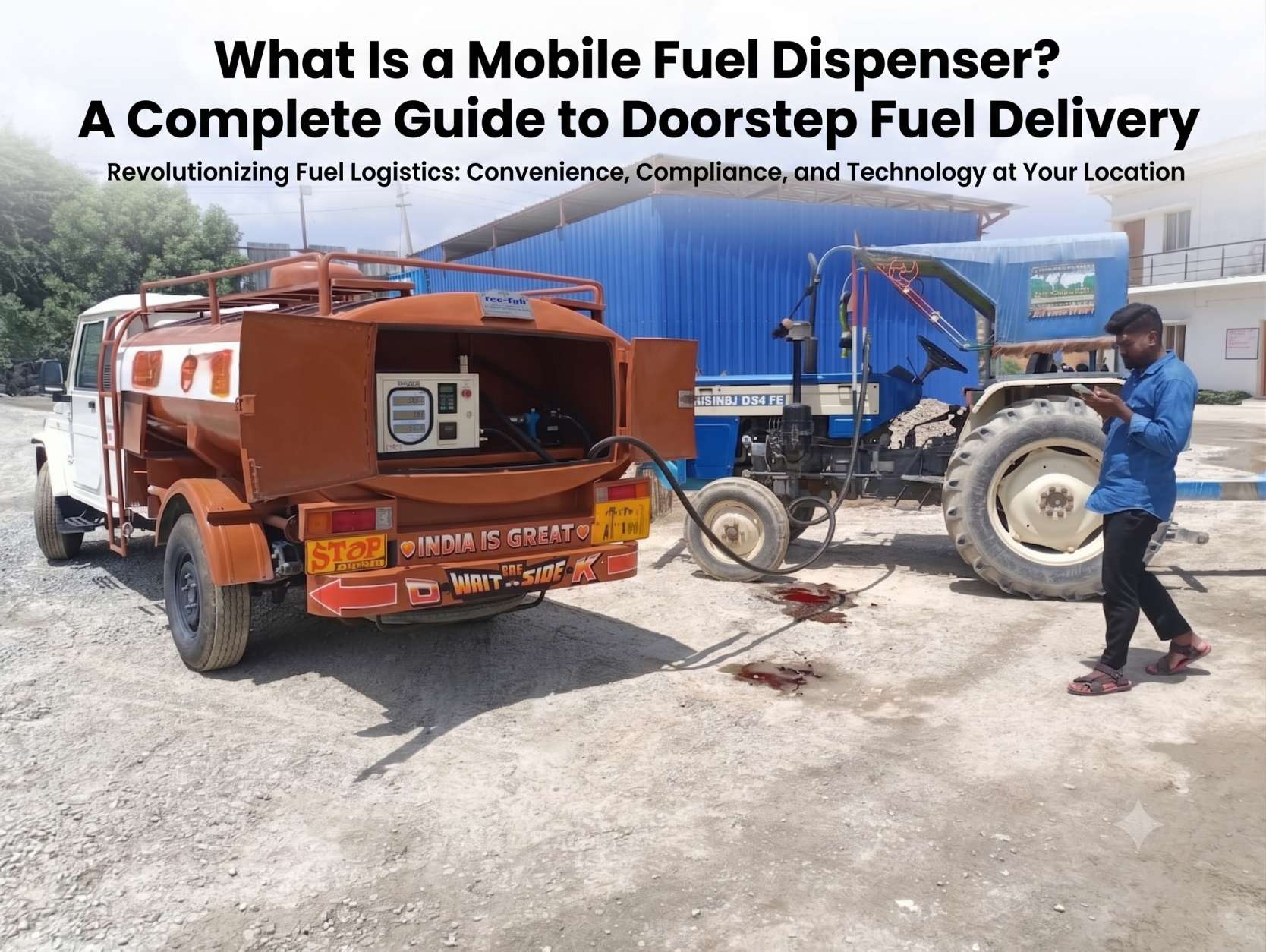
https://ntrindia.com/products?category=3 Not every location has easy access to a petrol pump. Mines operate far from city infrastructure. Construction sites shift...

Intellectual Properties Right, Kolkata organized a Workshop on “IPR Awareness for MSME s” on 14th March, 2020 at ICC Auditorium,...

Mr. Sandip Kumar Neogi, Director, Neogi Technologies & Research Pvt. Ltd. attended the CII National MSME Council Meeting held at...

Hulladek Recycling Pvt. Ltd. organized its 1st Award Distribution Ceremony on 29th February, 2020 at Hotel Hindustan International. Mr. Prabhat...

Neogi Technologies & Research Pvt. Ltd. participated in the session “Industry Interaction with Central PF Commissioner” on 21st February, 2020...